
While the economy seems to be on a firm growth path, the fight against inflation is not over yet. Shaktikanta Das seems to be in no hurry. After playing well through a five-year Test match, he doesn't want to get out hit wicket, observes Tamal Bandyopadhyay.

In a move that may put pressure on housing and other consumer loans, Reserve Bank of India on Tuesday hiked its short term lending and borrowing rates by 0.25 per cent.
In a move that may put pressure on housing and other consumer loans, Reserve Bank of India on Tuesday hiked its short term lending and borrowing rates by 0.25 per cent.

The Nikkei Markit India Manufacturing Purchasing Managers' Index (PMI) -- an indicator of manufacturing activity -- declined from 52.5 in April to a three-month low of 51.6 in May.

A comprehensive technical framework needed, from which a more convincing policy could be demonstrated

Consumer goods firms and auto companies are witnessing an upturn in rural demand, which had been lagging for most of FY24. Expectations of a bumper rabi crop harvest have helped turn the tide. The Reserve Bank of India's (RBI's) Monetary Policy Committee kept the repo rate unchanged last week, noting that as rural demand catches up, consumption is expected to support economic growth in 2024-25.
RBI likely to cut rate early next year.
Probably in August. We can argue whether RBI is dovishly neutral or neutrally dovish but the telltale signs of at least one more rate cut are strewn all over the policy statement, points out Tamal Bandyopadhyay.

The survey noted that advertising campaigns supported the increase in new work growth in the sector amid competitive pressures.
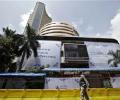
Auto and realty shares were among the top Sensex gainers.

The Nikkei India Services PMI posted above the critical 50.0 level, which separates growth from contraction, for the fourth month running in May.
Amid prolonged uncertainty, continued policy support will be crucial for sustained economic recovery from the coronavirus pandemic, Reserve Bank Governor Shaktikanta Das said at the recent meeting of the Monetary Policy Committee. "In this period of prolonged uncertainty, it would be wise to remain agile and respond in a gradual, calibrated and well telegraphed manner to the emerging challenges," opined Das, according to the minutes of the MPC meeting released by the Reserve Bank on Thursday. Observing that economic recovery from the pandemic remains incomplete and uneven, he said, "continued support from various policies remains crucial for a sustained recovery." The governor said the renewed surge in international crude oil prices, however, requires close monitoring.

Sectoral performance was mixed with media and PSU banking stocks attracting buyer interest and healthcare, FMCG and metal stocks bearing the brunt of the bears

Prices of perishable items could spike in the near term.
The Reserve Bank remains laser-focused to bring back retail inflation to 4 per cent over a period of time in a non-disruptive manner, Governor Shaktikanta Das stressed while voting for status quo in interest rates, as per minutes of the October policy meeting released on Friday. The central bank has been mandated by the government to ensure the Consumer Price Index (CPI) based inflation is at 4 per cent, with a band of 2 per cent on either side. The retail inflation, which was above 6 per cent during May and June, has started moving down and stood at 4.35 per cent in September.

Though valuations have moderated, they are still above average.

Ruling out a cut in lending rates, bankers said the status quo policy stance of the Reserve Bank will be followed by them, at least in the near-term.
An action on the rate front is unlikely to figure in Rajan's plan for the moment.

The Sensex jumped 412.23 points on Friday, braving heavy volatility during the day, amid the Reserve Bank of India maintaining status quo on the benchmark lending rate and buying in index heavyweights Reliance Industries Limited and ITC. The BSE Sensex climbed 412.23 points or 0.70 per cent to settle at 59,447.18. During the day, the benchmark hit a high of 59,654.44 and a low 58,876.36. The Nifty also gained 144.80 points or 0.82 per cent to finish at 17,784.35.

The policy review observed that the moderation in inflation, excluding food and fuel, that was witnessed in the first quarter of 2017-18 has "by and large, reversed".

The BSE Sensex was among the world's best performers in 2014, rising almost 30 per cent after Prime Minister Narendra Modi took office on promises of reforms to boost growth
Market participants must appreciate that staying cautious is a virtue for central bankers and should not expect a sudden reversal in the formal monetary policy stance.
BSE IT index was the biggest sectoral loser, down 1.5% dragged by TCS

Falling for the fourth day in succession, the rupee today dipped by 23 paise to close at nearly three-week low of 59.38 against the dollar amidst the RBI announcing an SLR cut that is expected to release nearly Rs 40,000 crore into markets.
RBI said the outlook for economic growth for 2016-17 has turned uncertain after the unexpected loss of momentum by 50 basis points in Q2 and the effects of the withdrawal of banned notes

The Reserve Bank on Friday retained the GDP forecast for the current financial year at 9.5 per cent and flagged global semiconductor shortages, elevated commodity prices and potential global financial market volatility as downside risks to economic growth. In his address after the three-day meeting of the rate-setting panel, RBI Governor Shaktikanta Das said recovery in aggregate demand gathered pace in August-September, and it is reflected in high-frequency indicators, like railway freight traffic; port cargo; cement production; electricity demand; e-way bills; GST and toll collections. "The ebbing of infections, together with improving consumer confidence, has been supporting private consumption," he said, and added the pent-up demand and the festival season should give further fillip to urban demand in the second half of the financial year.

A majority of the CEOs are expecting the economy to show growth in the next financial year on the back of rising consumer spending and a sharp turnaround in rural India.
The uncertainty created by the jump in COVID-19 infections and localised lockdowns prompted RBI Governor Shaktikanta Das and other members of the rating setting panel MPC to unanimously vote for status quo in interest rates and an accommodative policy stance to support growth, as per minutes of the meeting released on Thursday. "The need of the hour is to effectively secure the economic recovery underway so that it becomes broad-based and durable," the Governor said during the three-day meeting of the Monetary Policy Committee (MPC) which ended on April 7. The renewed jump in COVID-19 infections in several parts of the country and the associated localised and regional lockdowns add uncertainty to the growth outlook, he observed, as per the minutes of the meeting released by the central bank.
According to fund managers, expectations of a 25-basis-point increase in the cash reserve ratio of banks have heightened in the wake of RBI's surprise twin moves to make short-term money dearer as part of its attempts to curb the rupee's volatility.

ICICI Bank on Tuesday slashed home loan rate for both existing as well as new borrowers by 0.25 per cent.

India's manufacturing PMI rose to 54.5 in December, 2014, while in the corresponding period a year ago it stood at 50.7, just above the crucial 50 mark which separates growth from contraction.

Markets shrugged off RBI's neutral stance on key policy rates.

'The government's principal aim should be to reduce the volume of cash transactions.' 'That would bring more of the Indian economy within the purview of taxation.' 'The current downturn in economic activity due to a lack of adequate cash is likely to be limited to a year,'

FY22 will be the year to rebuild with the IMF projecting output growth at 11.5 per cent, economic survey at 11.0 per cent and the RBI's Monetary Policy Committee at 10.5 per cent.
Reserve Bank Governor Shaktikanta Das has pitched for policy support from all sides -- fiscal, monetary and sectoral -- to nurture recovery of the economy hit by the second wave of the coronavirus pandemic. The dent on economic activity due to the second wave of the pandemic during April-May necessitated continuation of monetary measures to support the process of economic recovery to make it durable, Das had said while participating in the meeting of the Monetary Policy Committee (MPC) earlier in the month. "Overall, the second wave of COVID-19 has altered the near-term outlook, and policy support from all sides - fiscal, monetary and sectoral - is required to nurture recovery and expedite return to normalcy," Das said, as per the minutes of the meeting released on Friday.

This development can strengthen the case for interest rate cut by the RBI.

Sensex to end this year at 27,500 and reach 29,000 by mid 2016.

The wholesale price-based inflation in February rose to 13.11 per cent on hardening of prices of crude oil and non-food items, even though food articles softened. After two months of mild easing, WPI inflation accelerated in February and remained in double digits for the 11th consecutive month, beginning April 2021. WPI inflation last month was 12.96 per cent, while in February last year, it was 4.83 per cent. The rise in crude oil and natural gas prices after the Russian invasion of Ukraine, beginning February 24, has put pressure on the wholesale price index, even though food articles saw softening across categories of vegetables to pulses to protein-rich items.
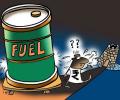
The wholesale price-based inflation accelerated to a record high of 12.94 per cent in May, on rising prices of crude oil and manufactured goods. Low base effect also contributed to the spike in WPI inflation in May 2021. In May 2020, WPI inflation was at (-) 3.37 per cent. This is the fifth straight month of uptick seen in the wholesale price index (WPI)-based inflation. In April, 2021, WPI inflation hit double digit at 10.49 per cent. "The annual rate of inflation, based on monthly WPI, was 12.94 per cent for the month of May, 2021 (over May, 2020) as compared to (-) 3.37 per cent in May 2020.

It's the beginning of a rate reduction cycle
